

APL syndrome causes blood clots and pregnancy loss. Only some OB patients should be tested. Read more
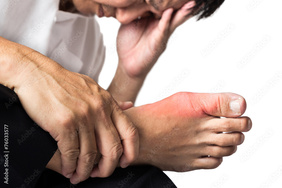
Because most people with hyperuricemia never get gout, treatment to lower uric acid has not been recommended universally, but that thinking might be changing. Read more
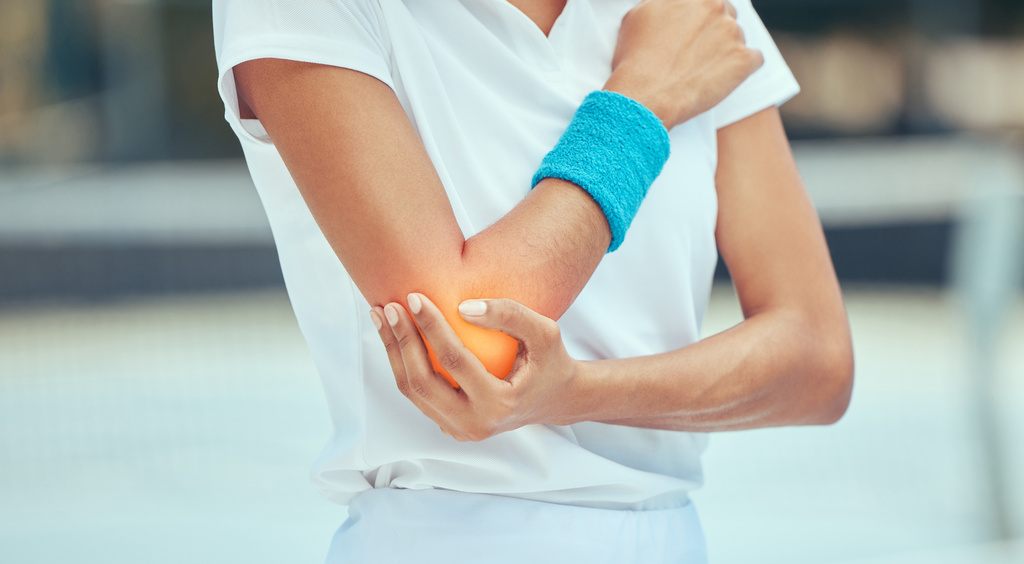
Injections can help soft tissue musculokeletal pains but might come with some risk

IV ig is a relatively safe treatment for various autoimmune diseases but like any treatment has side effects. Since it is often a last resort or one of few treatments for rare diseae, it would be best if side effects could be managed and not preclude use of the drug.
Uric acid, the cause of gouty arthriis, is reduced by drugs like allopurinol. There is some debate about how much to lower uric acid.
Inflammation around the heart can be caused by mutliple syndromes but usually is idiopathic (unknown cause)
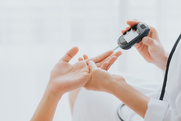
Prednisone often causes glucose intolerance to worsen to diabetes. This can be managed by monitoring and education but often involves adding diabetic medication.

Radiolab from Dec 3, 2020. A story about an unheralded pioneer in vaccine discovery. http://www.wnycstudios.org/story/great_vaccinator/

Genetics is a difficult science field so colleges offer a science class for non-scientists called Genetics for Poets. Applying a practical use of genes in an uncommon disease, hemochromatosis, provides instruction in genetics. The disease is diagnosed by identification of a pair of genes called HFE genes. The full name of the disease is Hereditary Hemochromatosis, thus applying the genetic cause.

Mosaic attneuation of lungs seen on CT of the chest is a non-specific finding that indicates a braod differential of lung disease.
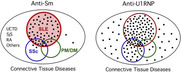
RNP is the most common false positive ANA. It can be a marker of lupus, scleroderma or mixed connective disease.
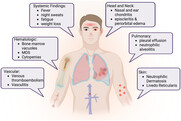
VEXAS was discoverd in 2023. It is a multisystem, genetic disease that affects mostly elderly men.

Calcified cartilage in joints is called chondrocalcinosis. It can be a marker for a crystal arthritis called pseudogout but more often is thought of as a product of cartilage deterioration.

While sickle cell disease is notorious for causing bone pain, sickle cell trait causes abnormal blood cell but not pain.
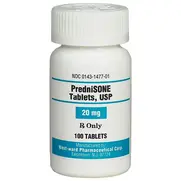
While many doctors prescribe stomach medicine while patients take prednisone (steroid pills), this might not be necessary. Read more

Segmental arterial mediolysis is narrowing of blood supply to the intestines. It is important to differentiate this rare disease from vasculitis. Read more

Many drugs are availble to treat psoriaisis and psoriatic arthritis. Read more about the details of these options.
Jul 29, 2026
Since Dr. Fauci is in the news again, it is time to review the history of a once fatal and fascinating (unless you have it) rheumatologic disease, ANCA vasculitis.
Timeline:
May 30, 2024
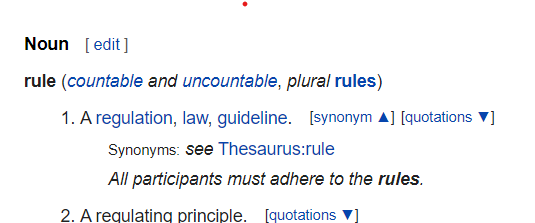
A wise doctor (not me) once said, "Rules work great until they don't." I remember this aphorisim came up when thinking about a lupus patient and if they had infection. The rule goes like this: high ESR plus low CRP means the problem is from lupus, while both high means infection. But, do you trust the rule enough to treat for lupus when the drugs for lupus can make infection worse? If a patient has chest pain, you think drastic disease like pulmonary embolism or myocardial infarction. But, if the pain is sharp and worse with inspiration and oxygen saturation is normal, can we use common sense and say the patient has pleurisy and not order a chest x-ray, a cat scan, an EKG and a troponin? The higher the risk for seriously bad outcome, the more you turn to the shotgun approach.

I remember working in a clinic in a small town in Oklahoma when I was a resident, i.e. moonlighting. I saw a patient with sinusitis and treated her with a prescription. After she left, I couldn't stop thinking that I was missing a case of meningitis. "What if the sinus infection went to her brain and that is why her head was hurting and why she had fever?" Maybe, I needed to do a lumbar puncture ("spinal tap")? I called to check on her and when I didn't get an answer, I drove to her house where she was sitting on her front porch in a rocker looking comfortable, not like a meningitis case, and I think she thought I was crazy. I remember another wise doctor (not me) saying, "if you think about doing an LP, you need to do it." Really? Maybe the point is these "rules" aren't really rules. Actually, maybe I need to check my definition of a rule.
References
May 30, 2024
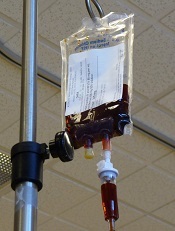
Iron deficiency is common especially among pre-menopausal women. Red blood cells transport oxygen. Iron is needed to make a RBC so when iron is low, anemia occurs. Low iron is treated with iron tablets but often this is hard to tolerate or just doesn't work, so some patients need IV iron.
| Brand name | generic | Regimen |
| Venofer | Iron sucrose | 100 to 300 mg per dose; repeat doses may be given until total iron requirements are met. Dosing schedule depends on iron deficit and ease of scheduling. Cumulative doses >1 g generally are not required during a single treatment course unless there is ongoing blood loss. |
| Ferrlecit | Ferric gluconate | 125 mg per dose is typically used, but may administer up to 250 mg per dose; repeat doses may be given until total iron requirements are met. Dosing schedule depends on iron deficit and ease of scheduling. Cumulative doses >1 g generally are not required during a single treatment course unless there is ongoing blood loss. |
References
Mar 15, 2023
A 90 year old patient had a visible laceration on his arm. When asked about it, he said he was climbing a tree. “I was pretty high up there. I couldn’t leave that broken limb.” His wife said, "Tell him to quit climbing trees." Not infrequently, a family member complains that a patient needs to change their behavior and sometimes the instinctive reaction is a defensive shoulder shrug or add, “Let your family member enjoy his life. A glass of wine or a cheeseburger every now and then isn’t going to kill anyone.” But, in this case, the spouse deserved support and the patient.needed chiding A fall from a tree at ninety years old could end up causing a lot of misery and if he ended up in a hospital or nursing home, who would take care of his wife?
Mar 8, 2023
Losing any of our senses - taste, smell, touch, hearing, eyesight - is frightening. Glaucoma is one of the most common causes of vision loss. Surprisingly, vision loss only occurs in a minority of people diagnosed with increased eye pressure. It is treated with drops and some people choose to have laser surgery so they don’t have to use daily drops for years. It is offered as a choice of equivalents, do this or do that. So, one might assume that the success rates of drops and surgery are equivalent. With drops, there is no question about which is the best drop. But, with surgeons, one might have the repuation of a genius when it comes to laser glaucoma surgery.(“And, he is not afraid to tell you so,” one patient added.) “You should go to Dr. A,” another patient advised. “He invented a certain kind of glaucoma surgery.” So, if drops are good, and surgery is as good as drops, why are people devising improvements to the procedure?
A patient who was treated for glaucoma for decades by a trustworthy eye doctor eventually lost a lot of vision in one eye despite drops AND eye surgery.
Another patient lost some vision in one eye from Shingles. If it occurs on the upper face it is from involvement of the first branch of the trigeminal nerve and this also affects the eye. This brings up another mode of disease treatment to consider, prevention or vaccination. She had the original Shingles vaccine and the two shot improved version of the vaccine. The latter is 90% effective but for her it was 100% ineffective.
We know most people including healthcare workers don’t get vaccinated against the flu. They say, “I was vaccinated and still got it.”
People love the modern phrase, “One hundred percent.” They use it to mean, “I agree with you,” or “absolutely!” It is emphatic and confident. And, we are all familiar with the phrase “give 110 percent.”
I agonize over lupus tests. Rheumatology seems the furthest field from getting to 100% accuracy when it comes to diagnosis. “How do you stand it?” colleagues in more concrete fields ask. Certainly, t is agonizing at times but the point is that most things in medicine are not decisions between 0% and 100% and I guess striving for an educated guess over an uneducated guess has to be an acceptable goal.
Feb 2, 2023
Farewell to Dr Seo, the Editor
For the last five years, Dr. Philip Seo, professor at John Hopkins School of Medicine, has been the editor of The Rheumatologist, a publication of the American College of Rheumatology. December was his last editorial and like all his others, was brilliant.
Some highlights of his articles from the last 5 years:
Happiness
Dr. Seo put the unhappiness or maybe last ditch effort for happiness from The Great Resignation during Covid 2020-22 in context of great thinkers like Sir William Osler and Anthony Fauci. (The Rheumatologist, Dec 2022)
Licensure
Dr. Seo tackles one obstacle to filling a demand for more providers and includes this snappy line that is so typical of his prose, “Diploma mills masquerading as medical schools sprung up across the country, like academic kudzu.” (The Rheumatologist, Oct 2022)
Dr. Seo is often invited to speak at meetings and gives lectures in person as informative and entertaining as his written commentaries. So, I look forward to continuing to gather some of his wisdom in his post-editor roles.
Feb 1, 2023
Artificial intelligence and medicine
Robots, algorithms, machine learning. The future is now. According to a New England Journal of Medicine article on technology in medicine, "Part of the challenge to our current system is encapsulated in the so-called Collingridge dilemma: early in a new technology’s development, uncertainty and minimal evidence about its impact impede policymaking, but once the technology has diffused and harmful effects have become clear, it may be too late to act." Harpers magazine notes that Chat GPT, a new artificial intelligence (AI) app (is it an app?), was able to pass a graduate level university course. While educators worry about Chat GPT replacing human effort, technology scientists are devising algorithms to detect the algorithms to combat plagiarism. More than just Luddites and even the most futuristic thinking experts express concern about AI worsening inequitable access to health resources in a diverse population. Along with leaders in business and academic fields, medical leadership is trying to steward the use of AI. ( Weekly Review. Harper's Magazine. Jan 31, 2023. D Mathews et al. Governance of Emerging Technologies in Health and Medicine — Creating a New Framework. NEJM. Jun 9, 2022. A Butte et al. The Case for Algorithmic Stewardship for Artificial Intelligence and Machine Learning Technologies. JAMA Sep 14, 2020)
Jan 31, 2023
Books Every Doctor and Patient Should Read
List A
The Death of Ivan Ilych - Leo Tolstoy
How We Die - Sherwin B. Nuland
Poems of William Carlos Williams - WCW
The House of God - Samuel Shem
The Mismeasure of Man - Stephen Jay Gould
Aequanimitas - William Osler
The 7 Habits of Highly Effective People (Chapter 5) - Steven Covey
The Plague - Albert Camus
Brain on Fire - Susannah Callahan
Pedagogy of the Oppressed - Paolo Freire
The Spirit Catches You and You Fall Down - Anne Fadiman
List B
My Own Country - Abraham Verghese
The Radium Girls - Kate Moore
To Siri With Love - Judith Newman
The Poison Squad - Deborah Blum
The Immortal Life of Henrietta Lacks - Rebecca Skloots
Cancer - The Emperor of all Maladies* - Siddhartha Mukherjee
The Mayo Clinic - Faith Hope Science* - David Blistein and Ken Burns
*PBS documentary