Aphthous stomatitis (mouth ulcers)
What is aphthous?
The term “aphthous” is derived from a Greek word “aphtha” which means ulceration. Recurrent aphthous stomatitis (RAS) is one of the most common painful oral mucosal conditions seen among patients.[3]
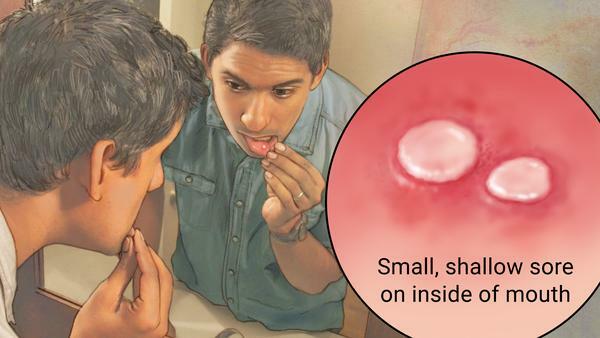
Recurrent aphthous stomatitis (RAS), commonly called "canker sores," is a perplexing oral condition characterized by the recurrent development of painful aphthous ulcers on non-keratinized oral mucous membranes. This condition poses a significant challenge to patients and healthcare professionals due to its uncertain etiology. Patients often report a family history of RAS, suggesting a genetic predisposition. Factors such as local trauma, stress, smoking cessation, anemia, and hematinic deficiency have also been linked to the occurrence of RAS. Gastrointestinal conditions like Crohn's disease, ulcerative colitis, and malabsorption diseases, including celiac disease, are associated with the development of oral aphthous ulcers. RAS is a possible clinical manifestation of more severe conditions like Behçet's disease or HIV infection, making early diagnosis and management critical. [1]
Treatment
There is no specific management of recurrent aphthous stomatitis. The best treatment is the one that controls the lesions for the longest time with few side effects. Management is influenced by the intensity of the pain, frequency of episodes, and the patient's medical history and tolerability to medication.Before initiating more directed treatment, it is essential to identify predisposing factors, if any, and control them. [1]
Treatment aims to alleviate symptoms, decrease the severity of the ulcers (number and size), promote healing, and prolong disease-free periods. In general, milder episodes of RAS are managed with NSAIDs and topical corticosteroids, like benzydamine mouthwash and chlorhexidine mouthwash, to prevent added bacterial infection. Furthermore, a combination of topical tetracycline and steroids may be of value. A short course of systemic steroids, such as prednisone, is indicated for managing a severe episode of major aphthous ulcers. Long-term systemic steroids are seldom recommended due to their serious adverse effects. Herpetiform ulceration is usually managed in the same way as minor aphthous ulcers.[1]
Chlorhexidine gluconate mouthwash and topical corticosteroids have been proven to decrease the severity of aphthous ulcers and shorten their duration. However, they do not affect the frequency of the outbreaks. Chlorhexidine mouthwash reduces the bacterial load, protecting from bacterial superinfection of the ulcers and promoting healing. Topical corticosteroids may stop the episode of aphthous ulcers when applied in the prodromal phase (when experiencing tingling or burning).
The severity of the lesions and the frequency of episodes vary in each patient; treatment must be adjusted to the patient's needs. Classifying patients into 3 categories, each with a different treatment strategy (A, B, or C), is helpful.[1]
Benzydamine for oromucosal use is indicated in the relief of pain and irritation of the mouth and throat. It is an indazole derivative, non-steroidal anti-inflammatory drug, with combined local anesthetic and analgesic properties, and antiseptic activity, marketed under the brand name “Tantum Verde”. [2]
Prescribe mouth paste for oral ulcers. Triamcinolone 0.1% paste 5 grams apply 1 application topically 2 times per day do not rinse afterwards and avoid eating or drinking for 30 minutes
[1] Plewa MC, Chatterjee K. Recurrent Aphthous Stomatitis. [Updated 2023 Nov 13]. In: StatPearls [Internet]. Treasure Island (FL): StatPearls Publishing; 2024 Jan-. Available from: https://www.ncbi.nlm.nih.gov/books/NBK431059/
[2] Passali D, Arezzo MF, De Rose A, De Simone G, Forte G, Jablko-Musial M, Mösges R. Benzydamine hydrochloride for the treatment of sore throat and irritative/inflammatory conditions of the oropharynx: a cross-national survey among pharmacists and general practitioners. BMC Prim Care. 2022 Jun 17;23(1):154. doi: 10.1186/s12875-022-01762-3. PMID: 35715725; PMCID: PMC9205545.
[3] Preeti L, Magesh K, Rajkumar K, Karthik R. Recurrent aphthous stomatitis. J Oral Maxillofac Pathol. 2011 Sep;15(3):252-6. doi: 10.4103/0973-029X.86669. PMID: 22144824; PMCID: PMC3227248.